
Launch your first online course (without quitting your job) | Nima Tahami
A step-by-step roadmap from validation to your first 100 students

Everyone these days wants to start an online course, and for a good reason.
It’s one of the easiest ways to dip your toes into digital entrepreneurship. No startup costs, no inventory gathering dust in your garage, infinitely scalable, and you can literally run it from anywhere (or more realistically, your couch).
Except... where do you actually start? How do you know if your idea is any good? And the big one: what if you launch and nobody shows up? These questions have a way of stopping most aspiring course creators before they even begin.
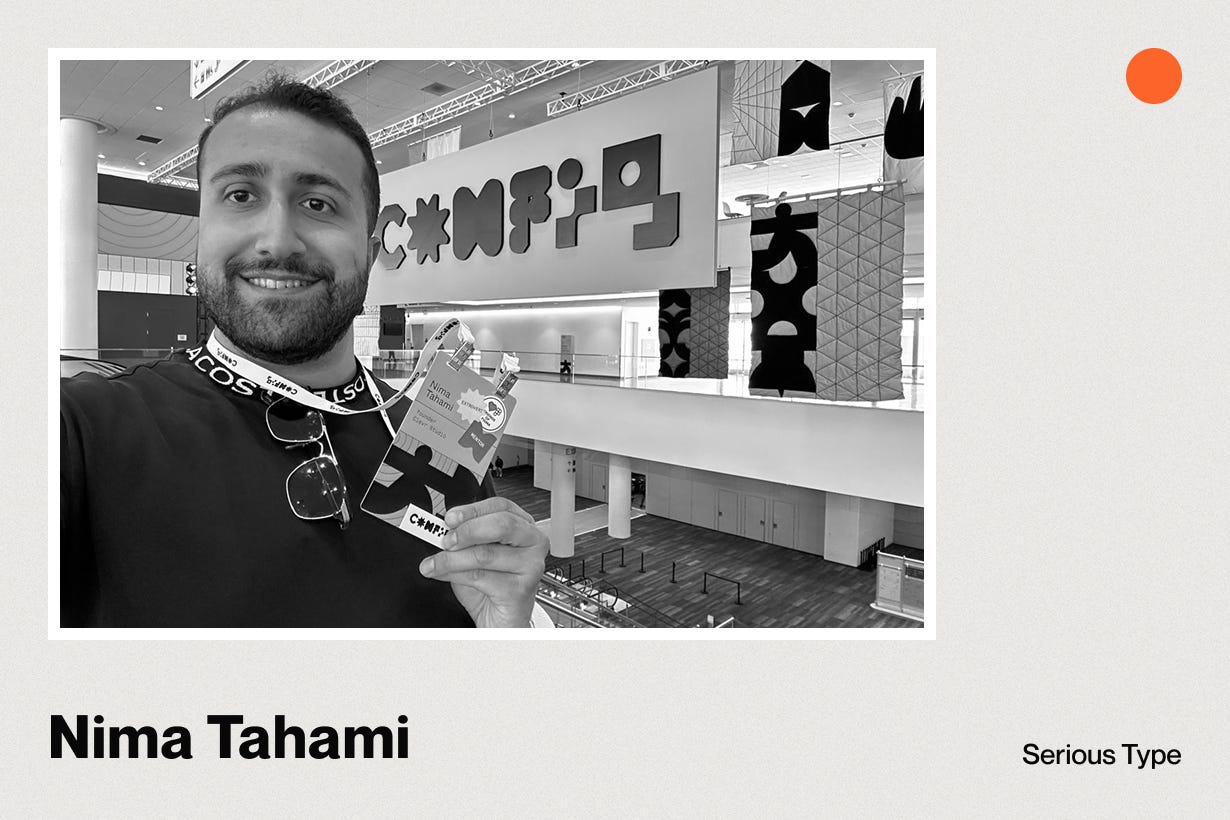
Nima Tahami had all the doubts when he launched his first Figma course during COVID-19. Today, his courses have attracted thousands of students across Udemy, Skillshare, and Maven.
I sat down with Nima to learn how he went from “hmm, maybe I should do this” to a successful launch, and what he’d do differently if he were starting today.
How did you decide on your first course topic?
The story goes back to when I became an online learner myself. I was in university, obsessed with building apps, binging courses on Udemy and Treehouse, watching these instructors teach thousands of students at once. The value was ridiculous.
I thought, “One day, I want to do this.” I’ve always been that person who loves sharing what I learn.
When it was time to come up with a topic, a lot of it came down to what I was passionate about and what I actually knew: product design and the tools designers use.
Back in 2015, I started filming lectures for Sketch, which was the design tool before Figma took over. But I was deep in a startup, so the whole project got shelved. Five years later, COVID hit. I was home. It was time.
I researched which tools to teach. I knew Figma from brief experiments, so I dove deeper to really master it.
The key thing that helped me decide was Google Trends. I threw in different keywords – Figma, Sketch, Adobe XD – and it was obvious that Figma was trending upwards compared to everything else. That’s how I knew Figma was going to be the future.
How can someone validate a course idea before investing months of work?
Start simple. List what interests you and what you actually know. Don’t overthink it – write “design,” then break it down into specific software you use. If you’re skilled with interesting tools, you have a topic.
Now validate it. Two approaches:
For cohort-based courses on Maven, create a landing page and drive traffic to it. You need about 50 waitlist signups for your course to appear in Maven’s marketplace. Built-in validation.
For Udemy, use their Insights tool. Search any keyword, like “Figma,” and it shows you course saturation, competition levels, and student demand. When I checked Figma, it was a perfect opportunity: high student interest, low course supply.
When you published your first course, was it easy to get your first students?
Not at all. It was a challenge.
It reminded me of launching apps – you build with high expectations, flip the switch to live, and... nothing happens.
I launched my first product, "The complete Figma course," taking students from zero to building a full app. Initially, pretty much no one signed up for it because when you're new, these platforms don't know how to rank you. You're buried on page 6 or 7 in search results.
You have to bring your own students.
I started going on Reddit and posting in relevant places. I ran a very small Facebook ad, maybe like 50 or 100 bucks, just to get some interest.
I started getting students slowly, bit by bit. Five, ten, twenty. After that, it just worked on its own. I almost did no marketing after that. Once the course was running and people were leaving positive reviews, it pushed it up in ranking, and within maybe 2 months or less, it was already on the first page of Udemy.
Here's what I tell people in product, that also applies to courses:
“No amount of marketing saves a mediocre product. You might get a few months of customers who cancel or request refunds. But if your product is polished and delivers real value, people stick around. They tell others. The flywheel spins itself.”
You’ve mentioned polish. What does “polished course” mean to you?
Those are all great things that help – the technical setup, background, professional video, clean audio.
When someone lands on your page, the promo video is the first thing they see. If your microphone sounds tinny, if your background looks amateurish – they’re gone. They’ll immediately judge whether your course is worth it compared to the ten others teaching the same thing.
On platforms like Udemy and Skillshare, quality varies wildly. There are polished courses, but plenty of mediocre ones too. I aimed for the high-quality production – crisp video, clean audio, tight pacing.
Was it perfect? No. Some students said I overused “go ahead” or nitpicked small things. You can’t please everyone. But it was polished enough to market itself.
What’s your secret to helping your course succeed long-term?
One thing I did was enroll in my competitors’ Figma courses to study them. I noticed that instructors ignored the Q&A section. Questions sat unanswered, sometimes forever.
I made a decision: I’d obsess over my Q&A. Every message, every question – I’d respond fast and thoroughly. Even though students were only paying $20 or $30, I treated their questions like they’d paid a premium.
This had two effects.
First, it built trust. Students saw that I actually cared about their success.
Second, it improved the course itself. When people got stuck on the same lecture repeatedly, I knew something was broken. So I’d re-record that section or fix the confusion. Over time, Q&A volume dropped because I’d eliminated the recurring pain points.
That feedback loop – students asking questions, me fixing problems – made the course stronger with every iteration.
What’s your process for creating a course from start to finish?
Pick a topic. Research what exists. Check the competitive landscape using Udemy’s insight tool and Google Trends. One day of research, nothing crazy.
If I decide to pursue it, I build a course outline. Now with ChatGPT, I pop in the topic, get a rough framework, make tweaks. I know it’ll change once I start recording. I’m not chasing perfection here.
Some people script their lectures. That never felt natural to me. My courses are project-based – we’re building something together, for example, designing an app. I record myself doing it in real time. Sometimes I mess up or rethink my approach, just like any designer would. I keep it natural. I’m capturing what actually happens.
When you show the messy parts, students learn two things: the technical skill and the thinking process. They see that even the instructor backtracks and problem-solves, which normalizes their own struggles.
Once I have recorded lectures, I edit between recordings when possible. Some nights I’d edit, some days I’d record a few lectures. Repeat until everything’s done.
Then I upload to Udemy, Skillshare, or Maven. I save the landing page for last – who’s this course for, descriptions, cover images. I make sure my course cover video is top-quality. Recording it last lets me showcase what we built and use footage from the course.
I also record an intro and outro last. “Welcome to the course, here’s what we’ll do.” “Congratulations, you finished.” Saving them for the end lets me incorporate B-roll from the course itself.
How long did it take you to create your first Figma course?
5 weeks. But I had a crazy schedule.
COVID had me home with nothing but time. I edited at night, recorded in the mornings – non-stop production. 5 full-time weeks for a 6-hour course.
When I have a project, I go all-in. I’d rather finish in 5 weeks than drag it out over 6 months.
If I had to do it again, it would probably take half the time now. There was a lot of repeating myself. Tons of unusable footage. Things broke on the way. And I was new to Figma myself too. I was teaching it, but I had learned it a couple of weeks before that.
I came from Sketch, which is similar, but there were differences. Components versus symbols. Different terminology. I spent a few weeks getting comfortable, then thought, “Okay, I’m ready.” Or at least I hoped I was.
It worked out. Actually, being new turned into a competitive advantage. I remembered every stumbling block because I’d just hit them myself.
Any advice for someone working full-time who wants to create a course?
Every course after my first one, I made while working full-time. Weekends, holidays, evenings – that’s when I produced content.
I work lecture-by-lecture, not randomly. First, I create a course outline – all the lectures I think I’ll need. It’ll change, but I need a starting point. Just give ChatGPT your course topic and let it generate the outline. Good enough to start.
Then I record two lectures. Then the next two. I edit as I go, so I’m not stuck with 60 videos to edit at the end.
A couple of years ago, I was working full-time when the winter holidays hit. Perfect timing – I spent one or two weeks finishing my course.
Don’t focus on meeting a specific number of hours of content. I used to think hours mattered. They don’t.
Cover the minimums and basics, but don’t bloat. If you’re teaching auto layout in Figma, you don’t need 20 lectures on it. Touch on the topic, show students how to use it, and move on.
Let's talk money. How did you figure out what to charge?
I looked at similar courses and matched them.
On Udemy, courses are discounted 80%+ almost constantly. Most students pay $20 to $30. You can opt out, but I wouldn’t recommend – it’s how Udemy markets, and why they take such a huge cut.
Skillshare is subscription-based like Spotify or Netflix. No pricing. Students pay a membership fee, and creators split a revenue pool based on watch time. More minutes watched = more money each month.
For Maven, they have pricing strategies based on course length, topic, and audience. I look at similar courses and price slightly lower, especially when starting out, to attract students.
Live cohorts versus pre-recorded – which one do you prefer?
Pre-recorded, listed for sale.
Cohort courses on Maven are rewarding – weekly calls, live lectures, direct feedback. I love that connection. But for someone doing this part-time? It's exhausting to repeat constantly.
Even in cohort courses, not everyone watches live. Some come back months later. I had one student finish a cohort two months after it officially ended. The self-paced element is there regardless, which is why I prefer pre-recorded.
In terms of revenue, cohort courses have a clear advantage. One Maven student can generate as much revenue as 30 or 40 students on Udemy or Skillshare. The trade-off is volume – you won't get the same scale.
Could you live off course revenue if you wanted to?
Absolutely. I know plenty of people doing it full-time, especially on Maven.
It just takes deciding that’s what you want to do. It helps if you’re creating content elsewhere – YouTube, Instagram – building an audience you can pitch to.
For me personally, my passion is building apps. I’ve been doing it since 2011. I could go all-in on courses and earn a good living, but I want to see people use my apps. That’s where my heart is.
If you were starting from zero today, what would you do differently?
Beyond using AI for outlines, I’d get more specific with my topic, especially for cohort courses.
On Maven, certain topics and audiences perform better. It’s positioned as a masterclass platform for targeted, high-level learning. My course there is beginner-oriented, which works better on Udemy or Skillshare.
I’d tweak it to target junior or senior designers looking to level up. Interestingly, I still had advanced students – like a PM at LinkedIn – who didn’t know Figma but wanted to learn it to work better with their designers.
So be more selective about your audience and subject matter on each platform. Targeted courses often perform better at higher price points.
Nima's journey from "I think I can do this" to successful course creator took about 5-6 weeks of focused work, but that first course did way more than just launch.
It taught him how to create better content, built an audience who trusted him, and opened doors to more opportunities and future products he hadn't even imagined yet. Every piece of feedback made his next offering stronger.
You don't need to be the world's top expert or have a five-year plan mapped out. You just need to be a few steps ahead, willing to share what you've learned, and genuinely care about helping people move forward.
Right now, someone out there is stuck on the problem you've already solved. They need a person who remembers what it's like to be where they are and knows the next few steps forward.
That person could be you.
Learn more from Nima
Curious about Nima's work?
Take a course: Nima teaches Figma, design, and product development on Udemy, Skillshare, and Maven.
Explore tools: Visit mokline.com to see Nima's apps and projects, including CueClip, an AI-powered video editor to help course creators edit faster with reduced repetition.
Connect directly: Find Nima on LinkedIn or Twitter/X to follow his journey building apps and courses.
Thank you for being here, and for supporting quiet long-form content in a world that rarely slows down. If you’re finding this newsletter valuable, share it with a friend, and consider subscribing if you haven’t already.
Much love,
Tina
P.S. What's stopping you from launching your first course? Or if you've already launched one, what was the hardest part?